Every customer call needs a clear next step. Whether someone wants an estimate, needs to reschedule an appointment, or has an urgent service issue, the way your business handles the call affects their experience.
For small businesses, telephone call handling can be challenging. Employees may be serving customers, working on job sites, or managing several responsibilities when the phone rings. A good call handling process helps your team respond consistently without making customers wait unnecessarily or repeat information.
What is telephone call handling?
Telephone call handling is the process of answering, managing, routing, and resolving incoming phone calls. It includes greeting customers, understanding their requests, collecting information, taking action, and confirming what happens next.
Example: A homeowner calls an HVAC company because their air conditioner stopped working. The call handler gathers the service details, checks appointment availability, and schedules a technician.
Updated November 2026.
What are the five steps of effective call handling?
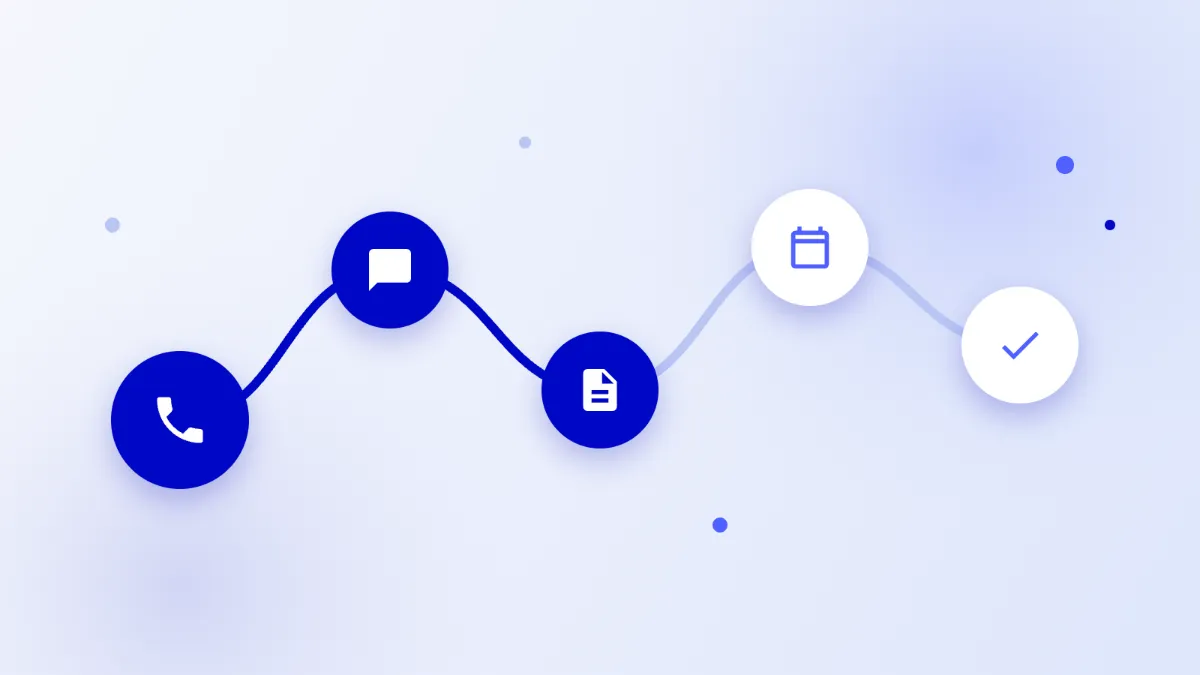
An effective telephone call handling process has five main steps: answer, understand, collect, act, and confirm.
| Step | Purpose | Example |
|---|---|---|
| 1. Answer | Greet the caller | "Thank you for calling Smith Plumbing." |
| 2. Understand | Identify the request | "How can I help you today?" |
| 3. Collect | Gather needed details | Record name, address, and service issue |
| 4. Act | Resolve or route the request | Schedule an appointment |
| 5. Confirm | Explain the outcome | Confirm the appointment time |
Step 1: Answer the call professionally
Start with your business name and a clear invitation to explain the request.
Example:
"Thank you for calling [Business Name]. This is [Name]. How can I help you today?"
A consistent greeting helps customers confirm they've reached the correct business.
Step 2: Understand what the customer needs
Listen to the customer's request before deciding how to respond. A homeowner reporting an HVAC problem may need immediate assistance, routine maintenance, or information about a previous appointment. Asking one relevant follow-up question can help clarify the situation.
Step 3: Collect the right information
Gather the information required to take action. For a new service request, that might include:
- Customer name
- Callback number
- Service address
- Description of the issue
- Preferred appointment availability
Avoid collecting information that isn't necessary for the request.
Step 4: Take the appropriate action
The call handler should help resolve the request or connect the customer with someone who can. That may involve answering a question, scheduling service, transferring the call, or creating a follow-up task.
Step 5: Confirm what happens next
Before ending the call, explain the outcome.
Example:
"Your appointment is scheduled for Thursday between 9 and 11 a.m. We'll send a confirmation to the number you provided."
Clear confirmation reduces confusion and gives the customer confidence that their request has been handled.
Why is good telephone call handling important?
Good call handling helps customers reach your business, get accurate information, and complete their requests. It also helps employees work more consistently.
Make a positive first impression
For many customers, a phone call is their first direct interaction with your business. A clear greeting and helpful response can establish confidence before a technician arrives or a service begins.
Support more appointment bookings
For service businesses, incoming calls often represent potential jobs.
A good call handling process helps ensure that employees ask the right questions, check availability, and offer appropriate next steps.
Reduce repeated questions
When employees document requests, customers don't have to explain the same issue repeatedly.
Improve communication between employees
Accurate call notes help scheduling teams, technicians, and customer service employees understand what has already been discussed.
Manage busy periods
A backup process for overflow calls helps businesses handle incoming requests when employees are unavailable. For a deeper look at how phone coverage affects business performance, see The Eight KPIs Every Home Service Owner Should Track.
10 telephone call handling best practices
Good telephone call handling involves more than answering quickly. Employees need to understand requests, collect accurate information, and move customers toward useful outcomes.
1. Answer calls promptly
Customers shouldn't have to wait through unnecessary ringing or repeated transfers. If employees are frequently unavailable, consider additional answering coverage or a defined callback process.
2. Use a consistent greeting
A standard greeting helps customers recognize your business and feel welcomed.
Example:
"Thank you for calling ABC Heating and Cooling. How can I help you?"
3. Listen before responding
Allow the customer to explain their issue.
If a caller says their heating system isn't working, ask a relevant follow-up question before deciding which appointment or department is appropriate.
4. Ask clear questions
Collect the information needed for scheduling or resolving the request. Keep questions relevant and avoid making customers repeat information. A call screening process can help identify customer needs before transferring calls to employees.
5. Explain the next step
Customers should understand what happens after the conversation. If a technician will call them back, explain when they should expect that contact.
6. Confirm important details
Repeat appointment times, service addresses, and other information that could create problems if recorded incorrectly.
7. Create emergency call procedures
Businesses offering emergency services should define which requests require urgent attention and who handles them. For example, an active water leak may need a different response from a routine fixture replacement.
8. Document customer requests
Record the reason for calling, information collected, and action taken. Store those details in the system your employees use for scheduling or customer management.
9. Plan for overflow and after-hours calls
Decide how incoming calls will be handled when employees are busy or the office is closed. Options include forwarding, voicemail, live answering services, and AI answering. If voicemail is part of your process, use a clear message from our 25 business voicemail greeting examples.
10. Review call outcomes
Monitor calls that go unanswered, requests that require repeated follow-up, and situations where customers abandon the call. Use those patterns to make targeted improvements.
Telephone call handling checklist
- Answer with a professional greeting.
- Listen to the customer.
- Identify the reason for calling.
- Collect accurate information.
- Determine urgency.
- Resolve, schedule, or route the request.
- Confirm the next step.
- Document the outcome.
- Assign responsibility for follow-up.
Telephone call handling scripts for common situations
Telephone call handling scripts help employees respond consistently to common customer requests. They should serve as examples, not rigid conversations. Employees still need flexibility to ask questions and respond naturally.
1. New customer inquiry
Thank you for calling [Business Name]. How can I help you today?
After the customer explains:
I'd be happy to help. Can I get your name, number, and the address where you need service?
Best for: New service requests and estimate inquiries.
2. Existing appointment inquiry
Are you calling about an appointment you've already scheduled? Let me get a few details so I can look into that.
Best for: Appointment confirmations and scheduling questions.
3. No appointment availability
We don't have an opening at your requested time, but I can check the next available appointments and help you find another option.
Best for: Busy service companies.
4. Transferring a call
I can connect you with the person who handles that. I'll share the information you've given me so you won't need to start over.
Best for: Businesses with multiple departments.
5. Upset customer
I understand you're concerned that your technician hasn't arrived. Let me check the appointment details and see what update I can provide.
Best for: Complaints and service delays.
6. After-hours service request
Thank you for calling [Business Name]. Our office is currently closed, but I can collect information about your request and explain the next available options.
Best for: After-hours answering and routine service inquiries.
7. Closing a call
Your appointment is scheduled for [Date and Time]. You'll receive confirmation through [Method]. Is there anything else I can clarify before we finish?
Best for: Confirming outcomes and reducing repeat questions.
How to create a telephone call handling procedure
A telephone call handling procedure is a documented process that explains how employees or phone systems should respond to incoming calls. For small businesses, a simple standard operating procedure (SOP) can help employees deliver consistent customer service.
Example: Small business call handling SOP
| Stage | Required action | Responsible person |
|---|---|---|
| Incoming call | Answer with standard greeting | Receptionist or answering system |
| Identify request | Determine the reason for calling | Call handler |
| Collect information | Record required customer details | Call handler |
| Check urgency | Follow escalation rules | Call handler |
| Complete request | Schedule, resolve, or transfer | Appropriate employee or system |
| Follow-up | Assign any unresolved tasks | Designated owner |
| Close | Confirm next steps | Call handler |
What should a call handling SOP include?
A useful SOP should document standard greetings, the information required for each call type, and procedures for scheduling, transfers, emergencies, and follow-up. It should also explain what happens when employees cannot answer.
Some businesses use an IVR system to direct calls to departments. Others use a receptionist or AI answering service to handle initial conversations. The right process depends on your business's staffing, customer needs, and available technology.
How often should you update your procedure?
Review your process when business hours, service offerings, employees, or scheduling systems change. You should also update it when customer feedback or call data reveals repeated problems.
How to handle difficult customer calls
Difficult calls may involve missed appointments, service delays, unexpected charges, or customers who are frustrated. Employees should focus on understanding the problem and explaining a realistic next step.
Listen to the concern
Allow the customer to explain what happened before responding.
Acknowledge the specific issue
A useful acknowledgment shows that you've understood the problem.
Example:
"I understand that your technician was expected this morning and you haven't received an update."
Explain what you can do
Provide a specific next step based on your business's actual capabilities.
Escalate when necessary
If the request requires another employee or manager, explain the transfer and share the relevant information.
Document the outcome
Record what happened and what follow-up was promised. This helps the next employee continue the conversation without requiring the customer to repeat everything.
What are common telephone call handling mistakes?
Poor call handling often comes from unclear processes rather than employees deliberately providing bad service.
| Mistake | Why it causes problems | Better approach |
|---|---|---|
| Missing calls without backup | Customers may give up | Add overflow coverage |
| Asking unnecessary questions | Creates delays | Collect relevant details only |
| Giving inconsistent information | Confuses customers | Maintain shared service information |
| Failing to document requests | Creates follow-up problems | Use standardized notes |
| Transferring without context | Forces customers to repeat themselves | Share call details |
| Making unrealistic promises | Creates unmet expectations | Confirm actual availability |
| Ignoring after-hours calls | Delays new service requests | Create an after-hours process |
Businesses should prioritize fixes based on how often these problems occur and how they affect customer outcomes.
How do you measure telephone call handling performance?
Call handling performance includes how often customers reach your business and whether their requests are resolved. The most useful metrics depend on your business goals.
| Metric | What it measures | Why it matters |
|---|---|---|
| Answer rate | Percentage of incoming calls answered | Reveals coverage |
| Missed-call rate | Percentage of calls unanswered | Identifies missed contact opportunities |
| Speed to answer | How long callers wait | Shows response delays |
| Call abandonment rate | Percentage disconnecting before assistance | Identifies friction |
| First-contact resolution | Requests resolved on the first interaction | Measures effectiveness |
| Appointment booking rate | Eligible inquiries that become bookings | Measures service conversion |
| Callback response time | Time required for follow-up | Measures responsiveness |
How to calculate call answer rate
Example:
If your business receives 200 calls and answers 170:
170 ÷ 200 × 100 = 85% answer rate
Decide how to count calls handled by automation and voicemail so you're comparing the same measure over time.
How to calculate appointment booking rate
Example:
If your team answers 80 qualified service inquiries and books 48 appointments:
48 ÷ 80 × 100 = 60% appointment booking rate
Exclude calls that were never eligible to become new appointments, such as vendor solicitations or existing customers checking on a previously scheduled job. For additional guidance, see Call Booking Rate: How to Measure It and What Good Looks Like. This explains how to define bookable calls and identify problems that affect conversion.
How can AI improve telephone call handling?
AI answering services can help small businesses manage calls when employees are unavailable, handling other customers, or working outside the office.
Depending on the software and configuration, AI can answer calls, ask questions, collect customer details, schedule appointments, and escalate requests. For example, an HVAC company could use AI answering to collect service information and check supported scheduling availability while its employees are busy.
ZyraTalk's AI answering service is designed for home service businesses that need reliable call coverage. It can answer incoming calls 24/7, qualify customer requests, book appointments through supported integrations, and provide transcripts and summaries for follow-up.
AI doesn't replace the need for good call handling procedures. Businesses still need accurate service information, clear escalation rules, and employees who can handle requests that automation cannot resolve.
Frequently asked questions about telephone call handling
What is telephone call handling?
Telephone call handling is the process of answering, managing, routing, and resolving incoming phone calls. It includes greeting customers, collecting information, taking action, and confirming next steps.
What are the five steps of call handling?
The five steps are answering the call, understanding the request, collecting information, taking the appropriate action, and confirming the outcome.
What are good call handling skills?
Good call handling skills include active listening, clear communication, accurate information collection, patience, problem-solving, and knowing when to escalate requests.
How can I improve my call handling skills?
Practice using clear greetings, asking relevant questions, confirming important details, and explaining next steps. Reviewing recorded calls where permitted can also identify opportunities to improve.
What is a telephone call handling procedure?
A telephone call handling procedure is a documented set of instructions explaining how employees should answer, manage, and complete different types of incoming calls.
What is the difference between call handling and call screening?
Call screening identifies callers and evaluates their requests before deciding what happens next. Call handling covers the full conversation, including answering, resolving, transferring, and following up.
What is automated call handling?
Automated call handling uses technology such as IVR, call routing, or conversational AI to manage part or all of an incoming call without requiring an employee to perform every step.
Can AI handle business phone calls?
Yes. AI answering services can handle routine calls, collect information, and complete supported workflows. Complex or unusual situations may still require human assistance.
Build a better call handling process
Effective telephone call handling helps customers reach your business, get accurate information, and complete their requests with fewer delays.
Start by reviewing how your team answers calls today. Identify where customers wait, where information gets lost, and which requests create repeated follow-up.
Then create clear procedures, train employees, and measure whether the changes improve customer outcomes.
Hear How ZyraTalk Handles Business Calls
If your team needs more coverage, ZyraTalk can help answer calls and support scheduling while employees focus on serving customers.
Explore ZyraTalk’s AI Answering Service