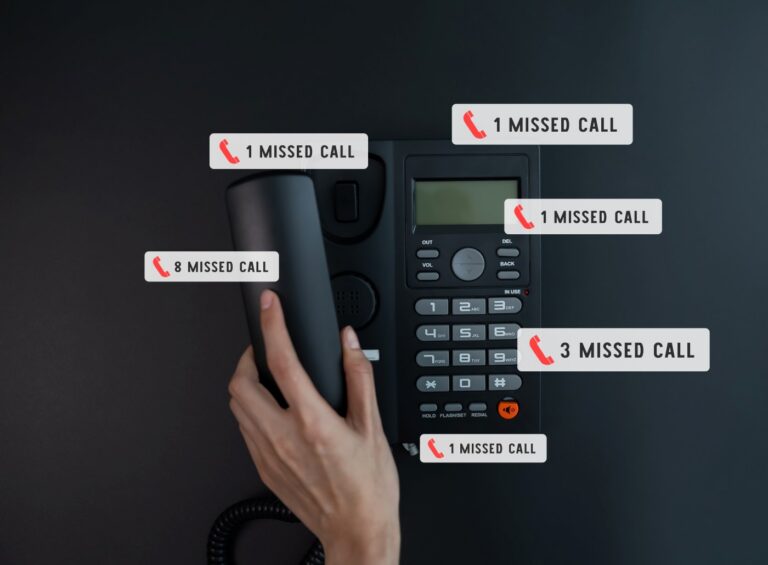
An AI answering service is software that picks up your business phone, holds a normal spoken conversation with the caller, works out what they need, and does something about it: books the appointment into your calendar, takes a message, answers a routine question, or passes an emergency to a person. It answers on the first ring, at any hour, and handles several calls at once. For a home service business, that is the difference between the two to four calls in ten that currently go to voicemail and a booked job.
Last updated October 2026. Answer-rate and booking-rate figures come from our 2026 HVAC benchmark data, April 2024 through August 2026.
- An AI answering service answers calls conversationally and takes action: booking, messages, answers, transfers. It is not a phone menu and not voicemail.
- It replaces a traditional human answering service for routine calls, at a flat monthly cost rather than per minute, with no hold queue and no limit on simultaneous calls.
- The booking part only works if it is connected to your scheduling software. That connection is the first thing to check.
- It is the right fit when the phone is how work arrives and the people who could answer are on job sites. That describes most plumbing, HVAC, electrical, roofing and cleaning companies.
- It does not replace a person for complex, upset, or unusual calls. A good setup recognizes those and hands them off.
What an AI Answering Service Actually Does
An AI answering service does four jobs on every call:
- Answers: It picks up immediately, every time, including the third call that comes in while the first two are still going. There is no ring-through to voicemail and no hold music.
- Understands: The caller talks the way they would to a person: "my water heater is leaking and I need someone today." The service recognizes the service type, the urgency, and the details it still needs, and asks for them.
- Acts: This is the part that separates it from a chatbot or a phone tree. Connected to your scheduling software, it checks real availability, offers times, confirms, and writes the job into your calendar. If the caller is an existing customer asking about an invoice, it answers from what it knows. If the question is outside its scope, it takes a complete message.
- Hands off: An emergency, a complaint, a caller who asks for a person, or a conversation it cannot resolve gets transferred live or escalated with a text or call to whoever you designate.
The same software usually answers your website chat and inbound texts with the same logic, which is why the category is sometimes called an AI receptionist or an AI CSR. The phone is the hard part and the part most home service businesses are losing on, so this guide stays on calls. If you want the receptionist framing, our AI receptionist explainer covers the same ground from the caller's side.
How It Works, Call by Call
A modern AI answering service is three systems working together in under a second: speech recognition that turns the caller's words into text, a language model that decides what the caller means and what to say next, and a connection to your business systems that lets it act on the decision. Here is what that looks like on a Tuesday evening call to a plumbing company.
- The call rings into the service instead of a cell phone. It answers with a short branded greeting, including a brief note that it is an automated assistant.
- The caller says a pipe burst under the kitchen sink. The service recognizes "burst pipe" as an emergency category you defined during setup.
- It asks the two or three questions you told it to ask for emergencies: is the water shut off, where are you, what is the best number.
- Because the job is an emergency and it is after hours, it follows your emergency rule: it texts the on-call tech with the details and tells the caller someone will call back within ten minutes. For a non-emergency it would have offered the next open slots from your calendar and booked one.
- The call, the transcript, the caller's details and the outcome land in your dashboard and, if connected, in your field service software as a new lead or job.
Setup is where the quality comes from. The service only knows your service area, your hours, your emergency rules, your pricing policy and your booking windows because you told it, and the services that perform well are the ones where that configuration was done carefully and tested with real calls before go-live.
AI Answering Service vs Voicemail, Text-Back, Human Answering Services and Call Centers
Every one of these is a way to deal with the calls you cannot answer yourself. They differ in who or what picks up, whether anything gets booked, and what it costs when volume changes.
| Option | Who answers | Can it book a job? | Simultaneous calls | Typical pricing | Best for |
|---|---|---|---|---|---|
| Voicemail | Nobody | No | Unlimited, but callers hang up | Free | Nothing. Most callers to a service business will not leave a message. |
| Missed-call text-back | Nobody; an automatic SMS goes out | Only if the caller replies and you respond | Unlimited | Low flat fee or bundled with a CRM | A safety net behind a human who answers most calls. See how text-back works and its limits. |
| Human answering service | An operator at a call center, from a script | Sometimes; usually takes a message for a callback | Depends on staffing; hold queues at peak | Per minute or per call, with monthly minimums | Businesses that want a person on every call and can absorb per-minute costs. |
| Call center / virtual receptionist team | Dedicated or shared agents | Yes, with training and system access | Limited by seats | Highest; monthly retainer plus per-agent or per-minute fees | Larger companies with steady call volume and complex intake. |
| In-house CSR | Your employee | Yes | One at a time | Salary, benefits, coverage gaps | Daytime volume high enough to keep a person busy; still needs after-hours cover. |
| AI answering service | Software, conversationally | Yes, when connected to your calendar | Unlimited, no hold | Flat monthly subscription, often tiered by volume | Businesses that miss calls because staff are on jobs, and want them booked, not just logged. |
The practical difference between the last two rows and everything above them is that a job gets booked while the caller is still motivated. Our speed-to-lead data shows the odds of winning the job fall sharply within minutes of the first attempt, which is why a message taken at 7pm and returned at 8am is worth a fraction of a booking made at 7pm.
If your current setup is voicemail or text-back, the question is not whether AI is better than a person. It is whether booking the call beats logging it. In our 2026 benchmarks the typical small HVAC shop answers six to eight calls in ten and books under four in ten of its paid leads, so the gap is in answering and booking, not in lead volume.
What It Handles Well and Where It Needs a Person
While it's a useful tool to have on hand, AI cannot handle everything. There are some times when escalating to a human is the right call for both customer service and business reputation.
Handled well
- New customer calls that follow a pattern: what is wrong, where are you, when can we come.
- Appointment booking, rescheduling and cancellations against a live calendar.
- Routine questions: hours, service area, whether you work on a brand, rough pricing policy, whether you are licensed and insured.
- After-hours and overflow volume, where the alternative is a missed call.
- Qualifying before booking: a service radius check, a job type you do not take, a homeowner versus a tenant.
- Capturing complete details every time, with no handwriting and no forgotten callback number.
Needs a person
- Upset customers, disputes, and anything involving a refund or a complaint.
- Unusual jobs that need a conversation with a technician before anyone can quote or schedule.
- Callers who ask for a human. The right behavior is to transfer, not to persist.
- Regulated conversations in some industries, where a licensed person must be on the line.
- Sales conversations where the caller is comparing quotes and wants to negotiate.
The design decision is how the hand-off works: live transfer to a ring group, a text to the on-call person, or a message with a promised callback window. Ask for all three and the rules that decide between them.
What an AI Answering Service Costs
Pricing models vary, but three patterns cover most of the market as of 2026.
- Flat monthly subscription, sometimes in tiers by call volume or by which channels are covered (phone only, or phone plus web chat and texting). This is the most common model for AI services and the easiest to budget.
- Per-minute or per-call, carried over from the human answering service model. Costs rise with volume, which is exactly when you most need the calls answered.
- Bundled into a platform you already pay for, such as a field service CRM. Convenient, but check whether the answering is conversational AI or a text-back feature with a new name.
The honest way to evaluate the cost is cost per booked job, not price per month. Take your average ticket, the number of calls you miss in a month, and the share of those callers who would have booked, and the subscription usually pays for itself on a small number of jobs. The missed call revenue calculator does that math with your numbers, and building the ROI case walks through the assumptions.
Who It Is For
The businesses that get the most from an AI answering service share three traits: the phone is the main way new work arrives, the people who could answer it are on job sites or driving, and the cost of a missed call is a whole job rather than a small sale. That is the trades.
- Plumbing and HVAC: emergency volume after hours, seasonal spikes, and a high average ticket.
- Electrical and roofing: estimate requests that need qualifying before anyone drives out.
- Cleaning, landscaping and pest control: recurring bookings, reschedules and route-sensitive scheduling.
- Home inspection: time-sensitive bookings tied to a closing date, often called in by an agent during business hours when the inspector is on site.
It is a weaker fit for businesses with a full-time front desk that already answers nearly every call, or for sales-led businesses where every inbound call is a negotiation. In both cases it can still cover after hours and overflow.
What to Look for Before You Buy
Five questions sort the market quickly. The full nine, with a test-call script and a scoring sheet, are in how to evaluate an AI answering service.
- Does it book directly into the scheduling software you use, with real availability, or does it take a message?
- What happens on an emergency call at 2am, step by step, and who decides the rule?
- How does it hand off to a person, and how fast?
- Can you listen to recordings and read transcripts of every call, and does it report answer rate and booking rate?
- What did it do on five real test calls, including one awkward one and one in heavy background noise?
Does It Have to Say It Is AI?
In several states the answer is yes, and the rules have changed more than once in the past year. Independent of the legal minimum, the practical recommendation is to disclose it briefly in the greeting: "Hi, this is the automated assistant for [Company], I can get you booked in." It sets accurate expectations and removes the moment where a caller realizes mid-sentence. The AI receptionist explainer keeps a state-by-state summary current.
Where ZyraTalk Fits
ZyraTalk is an AI answering service built for home service businesses. It answers calls, web chat and texts, qualifies the caller against your rules, books jobs into your scheduling software, follows up with every lead that does not book, and hands emergencies to your on-call person. It is part of EverPro, so it connects natively to field service platforms home service companies already run on. The AI answering service product page covers what it does on a call; the industry pages above cover how it is set up for each trade.
Answer every call. Book more of them.
ZyraTalk answers, qualifies and books every inbound call into your scheduling software, for HVAC, plumbing, electrical and cleaning businesses.
Book a demo- Answers on the first ring, 24/7
- Books into your calendar, not a message pad
- Hands emergencies to a person
AI Answering Service FAQ
What is an AI answering service?
An AI answering service is software that answers your business phone, understands what the caller needs, and takes an action such as booking an appointment, taking a message, answering a common question, or transferring an urgent call to a person. Callers speak normally; there is no keypad menu.
Is an AI answering service the same as an AI receptionist?
Mostly. AI receptionist usually describes the same software from the caller's side, while AI answering service describes it as a replacement for a traditional answering service. Some products also answer web chat and text messages, which a receptionist label does not cover.
How is an AI answering service different from a human answering service?
A human service puts an operator on the line who reads from a script and usually takes a message for a callback. An AI answering service answers instantly, handles any number of simultaneous calls, works from your live calendar to book jobs, and costs a flat amount regardless of call volume. A human service still has the edge on unusual, emotional, or ambiguous calls, which a good AI setup transfers to a person.
Can an AI answering service book appointments?
Yes, when it is connected to your scheduling software. It checks availability, offers times, confirms the booking with the caller, and writes the job into your calendar or field service platform. Without that connection it can only take a message, which is the main thing to check before you buy.
How much does an AI answering service cost?
Most are priced as a flat monthly subscription, sometimes with tiers by call volume or features, rather than per minute like a human answering service. The right comparison is cost per booked job: a service that answers every call and books more of them usually pays for itself on a handful of jobs a month. Use a missed call calculator with your own numbers rather than a generic estimate.
Does an AI answering service have to tell callers it is AI?
In several states, yes, and the practical recommendation everywhere is to disclose it briefly in the greeting. The rules are changing; the AI receptionist explainer on this site keeps a state-by-state summary current.
Will callers hang up on an AI?
Some will, mostly when the AI is slow, sounds robotic, or cannot do what they called for. Callers tolerate automation when it answers immediately and solves their problem. Test with real calls before you commit, and measure the hang-up rate against the calls you miss today, which for most small shops is two to four in ten.
Which businesses benefit most from an AI answering service?
Businesses where the phone is how work arrives and the people who could answer it are on job sites: plumbing, HVAC, electrical, roofing, cleaning, pest control, landscaping, and home inspection. Any business that misses calls after hours or during busy periods sees the same effect.