
Getting more HVAC leads starts with your foundation: a fast website, a complete Google Business Profile, and fast phone responses. From there, local SEO and paid ads bring in traffic, speed-to-lead decides whether it converts, and seasonal campaigns and maintenance plans keep you booked through the slow months. Here is the full year-round system.
You need leads to book new jobs. Without a solid HVAC lead generation strategy, you're leaving new jobs and leads to chance.
To attract and convert customers all year-round (yes, including the slow season), you need a combination of proven tactics. These tactics, like local SEO and paid ads, can help turn one-time repairs into repeat jobs and referrals. You stay booked and busy, regardless of the time of year.
We'll talk through your website, your Google profile, paid ads, and your local search rankings, as well as how much they each cost. You'll walk away with a full system for winning more jobs, in any season.
Key takeaways
Getting more HVAC leads starts with your foundation: a working website, a complete Google Business Profile, and fast phone responses. From there, local SEO and paid ads bring in new traffic, while speed-to-lead decides whether that traffic converts. Seasonal campaigns and maintenance plans fill in the gaps during your slower months.
What is HVAC lead generation?
Maybe their AC broke and they searched "AC repair near me." Maybe their furnace made a weird noise and they saw your ad. Either way, customers call you, fill out a form on your website, or book an appointment online.
That's a lead. HVAC lead generation is everything you do to make that happen — how you get people who need heating or cooling work to reach out to your business.
Lead generation vs. marketing
Marketing is the activity you do to build awareness and trust. It includes:
- Your website
- Your reviews
- Your ads
- Your reputation in the neighborhood
Lead generation is a narrower goal inside all of that. It's when a potential customer takes action toward hiring you, perhaps through your marketing efforts.
The year-round (seasonality) challenge
Summer arrives; your phone won't stop ringing. You're turning away work because your team is booked solid. Then, October rolls around. Suddenly, it's quiet enough to hear the ice machine humming in your break room.
That seasonal swing is a major challenge behind year-round HVAC lead generation. You need to get enough leads during the slow months to keep your crews busy and revenue reliable. At the same time, you don't want to waste money over-marketing during your busiest weeks, when the phone rings on its own.
A tactical approach to lead generation can help you strike the sweet spot in between.
Build your HVAC lead gen foundation
Website & landing pages
Your website is where most leads land after they search for you, click an ad, or get a recommendation from a friend. A good HVAC website does a few things:
- It loads fast.
- It communicates your unique selling proposition (USP).
- It tells a visitor exactly what you do and where you work.
- It makes calling or booking online or by phone effortless.
Make sure you have specific landing pages that align with exactly what customers are searching for. Say you run an ad for AC repair. Your landing page tailored for AC repair converts better for specific customers than sending that same visitor to your general homepage. It gives them highly specific, relevant information.
Google Business Profile
When a homeowner searches for an HVAC service, your Google Business Profile is often the first thing they come across.
Your rating alone can decide whether someone calls you or a competitor. About 78% of people won't consider a business with a rating below 4 stars.
If you don't have a profile set up yet, here's how to get started:
- Search your business name on Google and claim the listing if one already exists.
- If nothing shows up, create a new profile.
- Fill in every section: hours, service area, photos, and services offered.
Call & lead tracking
With call and lead tracking, you'll know exactly where every phone call and form fill came from. Because you'll know which dollar spent turned into which job booked, you can use that insight to optimize your lead-gen efforts and ad spend. In other words, you'll get more leads for your buck.
Without it, you're guessing whether your Google ads, your Facebook posts, or a simple word-of-mouth referral brought in that new customer.
Tools that provide call and lead tracking have other benefits, too. For example, an AI phone answering service can pick up every call. It can then log where it came from and make sure no lead is missed when your team is too busy to pick up.
For more on why real-time conversations convert, see 3 reasons why conversational marketing converts.
HVAC local search & SEO
HVAC marketing is how homeowners in your area find out you exist, both online and offline. Without digital marketing, especially local search and SEO efforts, you're essentially invisible.
It's no wonder a huge 94% of top-performing brands have a dedicated local marketing strategy — the right approach wins attention, familiarity, and trust.
Local SEO & the map pack
Local search engine optimization (SEO) helps you appear in Google results when someone searches for a business like yours in their area. The 'map pack' is the cluster of businesses Google lists at the top of local search results, right above the regular links.
Just over 40% of all local searchers click on the Google map pack, more than any other spot on the page. With 80% of people in the US searching for local businesses every week (and 32% doing so daily), you want to be right at the top of results and in the map pack.
The question is: how do you ensure your place in the pack?
- Claim and completely fill out your Google Business Profile.
- Get reviews consistently and reply to all of them, good or bad.
- Make sure your business name, address, and phone number (NAP) are identical everywhere your business appears online.
- Add photos of your team and completed jobs regularly.
Service area pages
A service area page is a page on your website that targets one specific city or neighborhood you serve. It's separate from your main homepage.
For example, you might serve the greater Denver area. You could then have 10 or more pages on your site that target location-specific keywords. That might be "AC repair in Aurora" or "furnace installation in Lakewood."
These pages boost SEO in a few ways:
- They give you a better chance of ranking for location-specific search terms.
- They give Google clear signals about every area you serve.
- They let you speak directly to a specific town's homeowners and build trust.
Local SEO depends on relevance. A page specifically for "Furnace Repair in Springfield" tells Google exactly what to show Springfield residents. A single generic homepage can't do this as effectively.
Content that ranks
High-quality content that ranks well in Google search results attracts traffic to your site.
Say you write a post titled "Why is my AC making a clicking noise?" A homeowner who searches for that exact phrase will find your post, read your explanation, and call you to book a fix.
Quality content can boost local SEO, too — it signals to Google that your site is active and genuinely useful. This helps your other, more local pages rank higher as a result.
A real example makes this concrete. Blind & Sons, a heating, cooling, plumbing, and electric company in Northeast Ohio, ranks on Google's first page for "Barberton HVAC" (their home base) and holds the #1 Local Services Ads spot there. One of their best-performing posts — "Will a New Thermostat Save Me Money on Energy Bills?" — looks like a broad topic at first glance, but it's seeded with location-specific phrases like "thermostat replacement in Akron OH" in the subheadings and body. The post answers the question up front, then delivers real value rather than dumping keywords. That's the balance to aim for: target mid-volume, low-competition keywords (roughly 100 to 1,000 searches a month) that pull in the right traffic rather than the most traffic.
Paid HVAC lead generation
Organic marketing takes months to pay off. Paid HVAC lead generation gets you in front of homeowners today, but at a cost.
HVAC search ads cost close to $45 per lead, according to a benchmark of over 3,000 home service ad campaigns. And remember, that's the price per lead. There's no guarantee all or any of your leads will convert.
Of course, that doesn't mean paid ads are too expensive to justify. Say your average job value is $350, and you convert 25% of leads.
- Out of 20 leads at $45 each, that's $900 spent.
- Five of those leads book a job, bringing in $1,750.
- That's $850 in profit, even with 15 leads that didn't convert.
Local Services Ads
Local Services Ads are the "Google Guaranteed" listings — the businesses that appear at the top of search results, above regular ads. Businesses need to complete the Local Services screening and verification process to get that little blue checkmark.
Should you use them? Let's weigh the pros and cons.
Pros:
- You pay per lead, not per click: a browsing visitor who never calls costs you nothing.
- The Google Guaranteed badge verifies your status and earns instant trust.
- These ads sit above every other result on the page, which is proven to lead to significantly more clicks.
Cons:
- You need to pass a background check and screening process to qualify.
- Lead quality can vary, since Google decides who sees your listing.
- You can't control the ad copy the way you can with search ads.
Google Search ads
Google Search ads are the paid listings that show up above organic results when someone searches. These ads let you target exact phrases homeowners type in during an emergency and put your business in front of them instantly.
If you're keen to give Search ads a go, follow these best practices:
- Align your ad copy to the exact service someone searched for.
- Send clicks to a landing page for that service, not your homepage.
- Add your phone number in the ad, so mobile users can call with one tap.
Facebook & retargeting
Meta advertising lets you serve paid ads on Facebook and Instagram based on location, age, and interests instead of search results.
These ads are great opportunities for retargeting. It shows your ad again to people who already visited your website but didn't call or book. Retargeting can put your ad back in front of them a few days later, right when they're ready to make a decision.
Where to buy HVAC leads
Here's what you need to know about buying leads from a lead generation company.
Organic vs. paid vs. buying leads
What's the difference between organic, paid, and bought leads?
- Organic leads are those that find you through search, reviews, or word of mouth. You don't pay for the leads directly.
- Paid means you generate leads through ads, like Google Search ads or Local Services Ads. You control the targeting efforts.
- Buying leads means purchasing contact information from a third-party HVAC lead generation company. They find and qualify the lead for you.
Are HVAC lead-generation companies worth it?
HVAC lead generation companies collect and sell contact information for homeowners who need some kind of HVAC service. Whether they're worth it depends on your situation.
- If you're new to a market or short on leads during a slow month, they can fill your pipeline.
- If you already have solid organic and paid channels, the cost per lead may be higher than what you'd pay generating leads yourself.
Keep in mind, these leads frequently get sold to several competitors at the same time. So, you still have to compete.
Convert more HVAC leads
How many leads you get is just one side of the coin. The other is conversion.
Respond in minutes
Homeowners calling about a broken AC or furnace usually phone more than one company. They need help fast. Speed-to-lead — how fast you respond after someone reaches out — plays a central role in converting qualified leads into paying customers. Whoever answers first is likely to win the job.
Let's look at two scenarios.
In the first, a homeowner calls at 2 PM about a broken AC. You call back within 10 minutes, answer their questions, and book a same-day appointment. They're relieved and ready to move forward.
In the second, that same homeowner calls, gets your voicemail, and leaves a message. You call back at 5 PM. By then, they've already booked with a competitor who answered on the first ring.
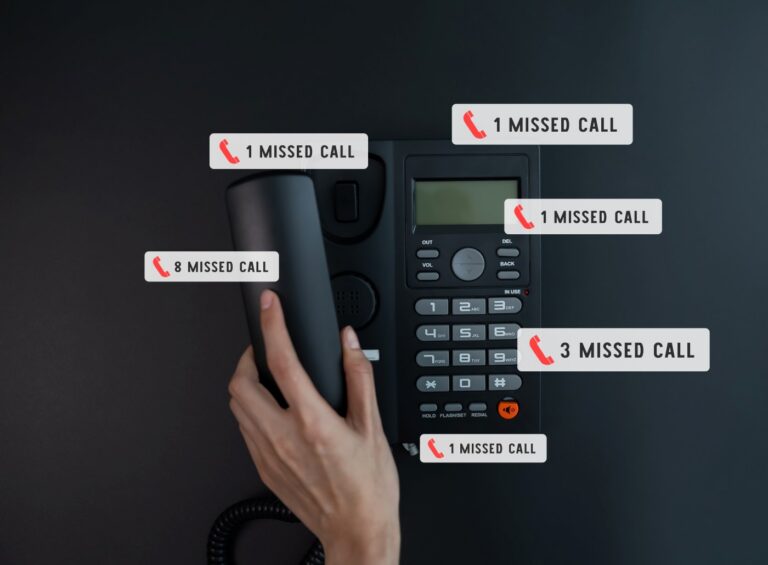
Missed calls cost businesses thousands, and in some cases millions, in lost opportunities. Our internal data shows that most businesses miss anywhere from 15% to 35% of their phone calls.
Curious what missed calls are actually costing your business? Try our Missed-Call Revenue Calculator and see the number for yourself.
Missed-call text-back & 24/7 capture
What happens when your team is out on jobs and physically can't answer the phone? For a lot of HVAC businesses, that's exactly when leads slip away.
Two tools can help solve this problem: missed-call text-back and 24/7 lead capture.
- Missed-call text-back sends an automatic text the moment a call goes unanswered. The homeowner hears back instantly instead of reaching voicemail and hanging up.
- 24/7 lead capture takes this further. This system answers calls and books appointments around the clock, even at 2 AM or on a Sunday when your office is closed.
Year-round HVAC lead strategies
Summer and winter keep you busy, while spring and fall are often quiet. Here's how to keep the leads coming in year-round.
Seasonal heating/cooling campaigns
Residential homes use more gas and electricity in winter than any other season, driven largely by heating. In the summer, they rely on their AC to keep their home cool and comfortable.
Time your campaigns to play into that reliance:
- Run furnace tune-up ads in early fall, before the cold hits and emergency calls start flooding in.
- Run AC ads in late spring, before the first heat wave.
- Save a portion of your budget for storm or cold-snap spikes, when demand jumps overnight.
Maintenance plans & repeat work
Maintenance plans take a one-time customer and turn them into someone who books you over and over again.
- Sell a plan after any repair or install. That way, you already have a scheduled reason to reach out again next season.
- Use that visit to catch other worn-out parts early, since you're already in their attic or basement.
- Send renewal reminders automatically, so plans don't lapse without you noticing.
SMS is an underrated channel for driving this repeat and referral work. Text messages have open rates as high as 98%, far above email, which makes them ideal for maintenance reminders, seasonal promotions, and referral incentives. A simple play: text your list of loyal annual-maintenance customers an offer — say 15% off their next appointment when they refer a friend. They're already paying for the service, so the nudge costs you little and the word-of-mouth compounds. Referred customers convert at a higher rate because they already trust the person who sent them.
Frequently asked questions
How do I get back HVAC leads lost from missed calls?
Two tools can help solve this problem: missed-call text-back and 24/7 lead capture. Missed-call text-back sends an automatic text the moment a call goes unanswered, while 24/7 lead capture answers calls and books appointments around the clock.
Are HVAC lead generation companies worth it?
It depends on your situation. They're useful for new businesses or slow stretches needing quick volume. But leads are typically shared with competitors and can cost more than leads you generate yourself.
How much do HVAC leads cost?
HVAC search ads average close to $45 per lead. Costs vary by season, location, and how competitive your local market is.
Does local SEO really work for HVAC companies?
Yes. A large share of HVAC searches are local, near-me queries, so ranking well for your service area and keeping your Google Business Profile complete puts you in front of homeowners at the moment they need you.
Conclusion
To get more HVAC leads, cover your foundation first. Get a solid website that loads quickly and is easy to navigate. A few location pages and some quality content can help with your Google rankings, too. Complete your Google Business Profile and aim to get more reviews. If you need more leads quickly, explore local SEO and paid ad campaigns to attract more traffic to what's already converting well.
Even if you get all this right, generating leads is only half the job. Answering and booking them is critical, too. You don't want to drop the ball at the last minute. An AI answering service and 24/7 lead capture can help.
ZyraTalk picks up every call and books appointments before a homeowner takes their business elsewhere. If you want to see how that works, schedule a demo today.
Want to start attracting more leads? Here are some easy next steps:
- Look at your Google Business Profile. Check if your hours, service area, and photos are current.
- Search your own business name on Google and see if a service area page shows up for your city, or if you need one.
- If you want to experiment with paid ads, set a budget. Decide which platform is the best fit for your goals.
Book more HVAC jobs, year-round
ZyraTalk picks up every call, captures the lead and books the appointment 24/7, so the traffic your marketing brings in turns into work.
Book a demo- Answers every call, 24/7
- Missed-call text-back
- Books jobs automatically